D.Castello, G.B. Fontana, G.B. Riccio, G. Kapsberger, C. Monteverdi etc
ensemble Cantores Vagantes
Reet Sukk – recorders, renaissance flute
Taavi-Mats Utt – recorders
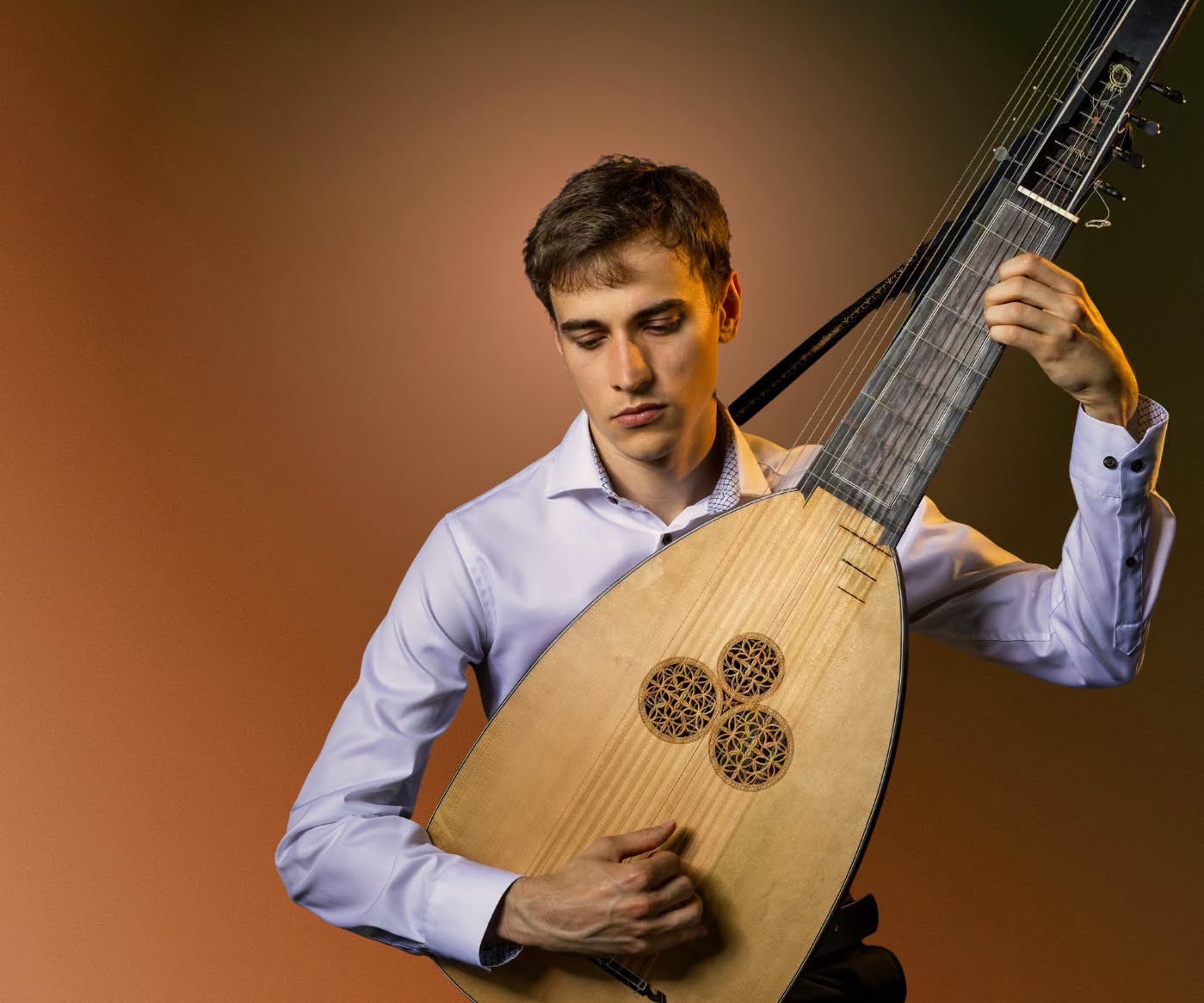
Priit Peterson – theorbo, baroque guitar
Andrew Lawrence-King – baroque harp, Italian pentagonal spinet, organ
In collaboration with Eesti Interpreetide Kontserdid SA
The theme of historical periods connects music with the visual arts, architecture and literature – and, indeed, with all the fine arts. Yet epochs do not emerge overnight or without reason; rather, they reflect changes taking place in society.
Our focus this time is on the intense, vibrant period between the Renaissance and the Baroque, a time brimming with new ideas and artistic exploration. Italy was the cultural cradle of this era, exerting a profound influence on music throughout Europe. To gain a slightly deeper sense of Italy’s extraordinary cultural richness, so difficult to grasp in its full breadth, we have chosen music associated with just one city. Venice – a place that has already found its way into all our hearts in one way or another, and which, over the course of this concert, will surely win our affections even more deeply.
Castello, Rossi, Riccio, Fontana, Bononcini and others are names some of you may already know, but by the end of this concert, they will likely have become familiar companions. They are like trusted fellow travellers who ask nothing of us, yet offer their support at the moments when we need it most.
——–
The early music studio Cantores Vagantes has been active since 1989. The ensemble brings together musicians who share a passion for the interpretation of early music. They perform on replicas of historical instruments, following historically informed performance practices. The studio has no fixed membership; rather, it can be seen as a circle of professional musicians and friends, with the number of performers varying according to the demands of the repertoire.
Reet Sukk is one of Estonia’s most distinguished baroque flute and recorder players. Her musical journey began at Viljandi Music School and continued with the Viljandi Linnakapell, directed by Tõnu Sepp, whose influence helped shape her future specialisation. Although Reet initially studied modern flute with Samuel Saulus at the conservatory, she graduated specialising in baroque flute. She subsequently pursued further studies in baroque flute and recorder at the Royal Conservatoire in The Hague with Wilbert Hazelzet and Jeanette van Wingerden. Since returning to Estonia, Reet has focused primarily on concert projects with early music studio Cantores Vagantes, which she runs together with Taavi-Mats Utt, and on organising the Tallinn feat. Reval festival, launched in 2028. She has also participated in numerous other early music projects and frequently performed as an orchestral soloist. Among her several recordings, the 2013 CD Music from the Nodic Lands stands out. Featuring an original eighteenth-century flute, the album was nominated for the Estonian Music Awards 2014 and named Chamber Music Album of the Year. Alongside performing, Reet teaches at the Estonian Academy of Music and Theatre and the Tallinn School of Music and Ballet (MUBA). As a founding member of the Estonian Recorder Association ERTA-Estonia, she also regularly contributes to the professional development of recorder teachers.
Taavi-Mats Utt is a performer, instrument maker and historian, teacher, and concert organiser. He began studying the recorder privately with Heino Jürisalu, who also encouraged his interest in playing the baroque oboe. He continued his studies in oboe at the Georg Ots Tallinn Music School and later specialised in recorder at the Royal Conservatoire in The Hague, where he studied with Jeanette van Wingerden. Since 1989, Utt has directed the early music studio Cantores Vagantes, with which he is also actively involved as a performer. His keen interest in the construction and reproduction of historical woodwind instruments has led to practical achievements as an instrument maker and invitations to present new approaches to copying Renaissance recorders at the MedRen conference, the Sibelius Academy, and the Schola Cantorum Basiliensis in Switzerland, one of the world’s leading centres for early music. Since 2000, Utt has been involved with the Estonian Recorder Association ERTA-Estonia, regularly leading professional development courses for recorder teachers. His commitment to advancing the field led him to establish the Recorder School in 2018 and initiate the early music festival Tallinn feat. Reval. His work also encompasses numerous television and radio programmes and articles on early music. Taavi-Mats additionally teaches students specialising in early music at the Tallinn School of Music and Ballet (MUBA).
Priit Peterson is an Estonian guitarist and theorbo player who has studied classical guitar at the Franz Liszt University of Music in Weimar and historical plucked instruments at the Schola Cantorum Basiliensis in Switzerland. Early music has become his primary artistic focus, and he performs as a theorbo player and baroque guitarist in solo, chamber music and orchestral settings. Priit Peterson has performed in Estonia and abroad, collaborating with various early music ensembles and performers, including the Estonian Baroque Orchestra. He has taken part in masterclasses led by renowned guitarists and early music specialists and founded Trio Lucaria, whose repertoire spans early music and classical chamber music.
Andrew Lawrence-King is an internationally acclaimed early music performer, conductor, stage director, opera composer, and master of historical harp and basso continuo. Originally from Guernsey and now based in Tallinn, he is regarded as one of today’s leading early music specialists and serves as the musical director of the Estonian Baroque Orchestra. His international career has focused primarily on performances and collaborations with some of the world’s most renowned early music artists and ensembles, including his longstanding partnership with Jordi Savall. He has conducted and directed baroque operas at leading opera houses worldwide and received numerous international awards, including a Grammy, Russia’s Golden Mask and the Dutch Edison Award. In Estonia, Andrew Lawrence-King has become much more than an internationally acclaimed guest musician. Through years of dedicated work, he has helped shape and develop the country’s professional early music scene, bringing his international experience, extensive network of contacts and high artistic standards to Estonia. His contribution has been particularly significant in establishing and developing the Estonian Baroque Orchestra and bringing together Estonian early music performers, students and academic musicians. As the driving force behind the Estonian Baroque Orchestra, Lawrence-King has helped establish it as a professional ensemble with international potential. The orchestra has prepared and performed nearly twenty concert programmes, including appearances at the Tallinn feat. Reval and Viljandi Early Music festivals. In 2024, he directed and served as musical director for Monteverdi’s L’Orfeo at the Birgitta Festival. His work in Estonia has also included reconstructing and performing the opera Arianna a la recherche, performing with Hespèrion XXI, and leading early music workshops at the Estonian Academy of Music and Theatre (EMTA), the Tallinn School of Music and Ballet (MUBA), and the Heino Eller Music School.